Scopely
Mobile game played by millions. Designed features and systems for a live product at scale.
Client
Type
Year
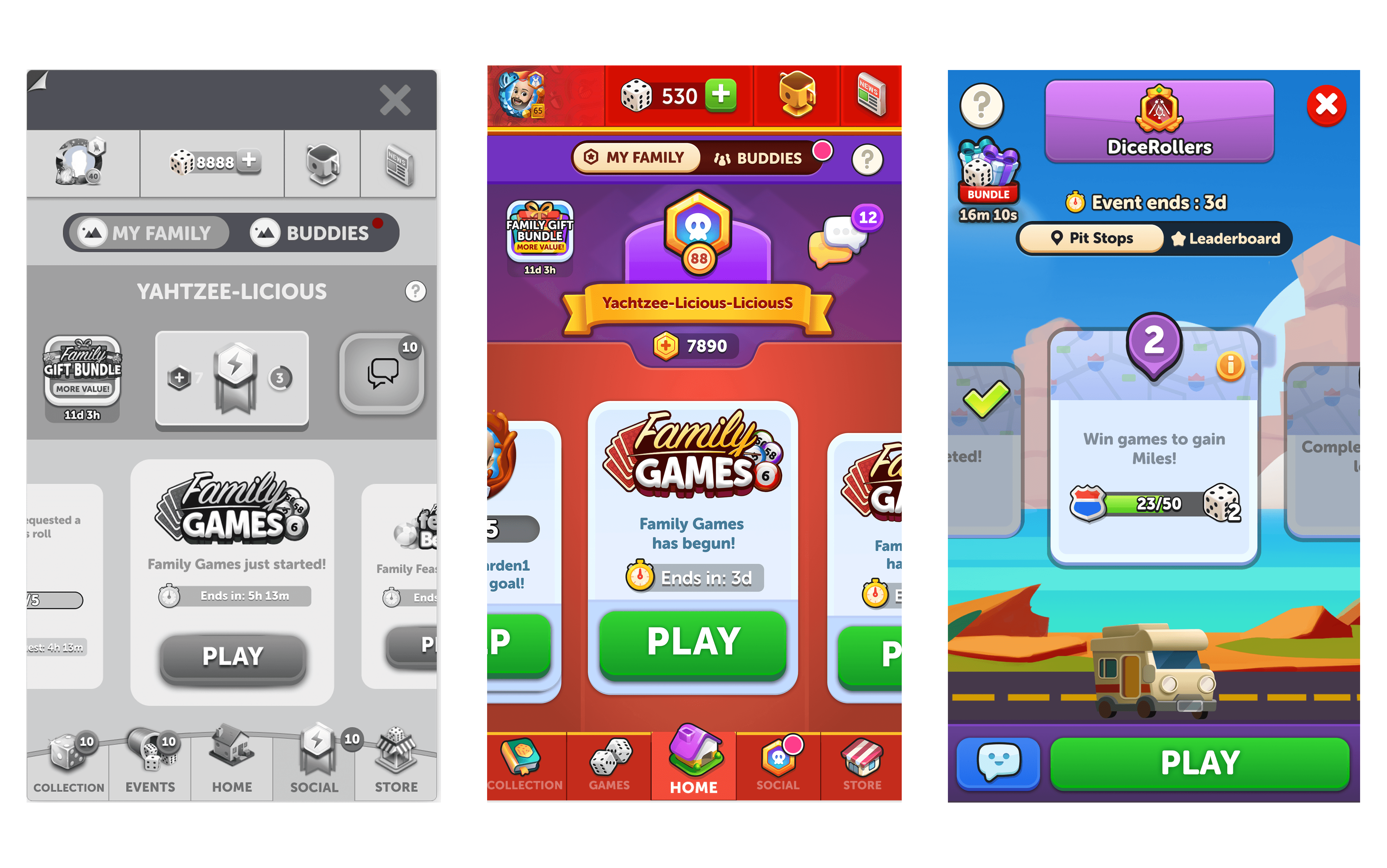
SOLUX: A two year journey through Yahtzee With Buddies' social experience
Context
SOLUX is the internal name for a multi-year initiative I led to redesign the social and family experience in Yahtzee With Buddies, a mobile game played by millions.
The problem
The social lobby was fragmented across multiple screens. Players couldn't tell where to play, how to engage with family, or what mattered most in the experience. Business goals were clear (simplify the social experience, surface games better, strengthen family chat) but the path there kept shifting under leadership changes and competing priorities. Nothing about this got solved in one pass. It took three distinct attempts across two years to get right.
What I learned
Live-service design means the ground moves under you constantly, leadership changes, scope gets cut, priorities flip mid-project. I learned to treat that as the actual job, not a disruption to it, and to keep finding the version of the solution that fit whatever constraints showed up that quarter.
Tools
Cross-functional pods (UX, game design, engineering, art, PM), research and playtesting for validation, and systems thinking to keep design coherent across three separate rebuilds.
Key problems and how I solved them
Phase 1: The lobby was fragmented and had to stay that way
The social lobby lived across three competing screens with no clear hierarchy. Users complained about the experience and game season cadence.
My phase 1 brief:
1. Streamline the experience.
2. Unify the family lobby
3. Family games as the primary focus
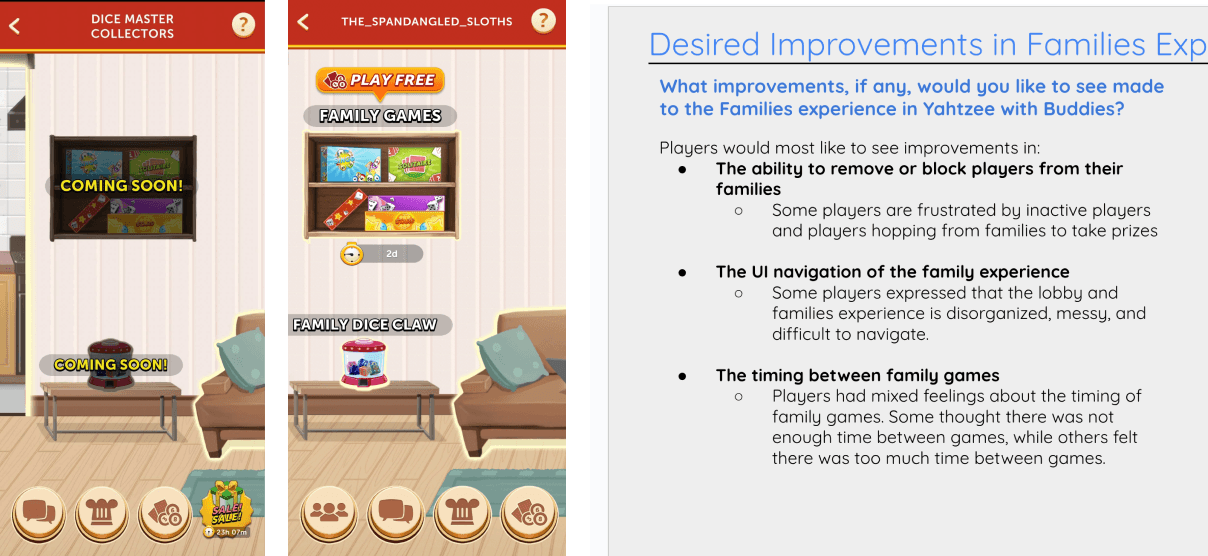
I reduced it to one legible surface, re-prioritized core actions, and clarified the social structure. It tested well internally. The project was intended to be 7 sprints and we started development.
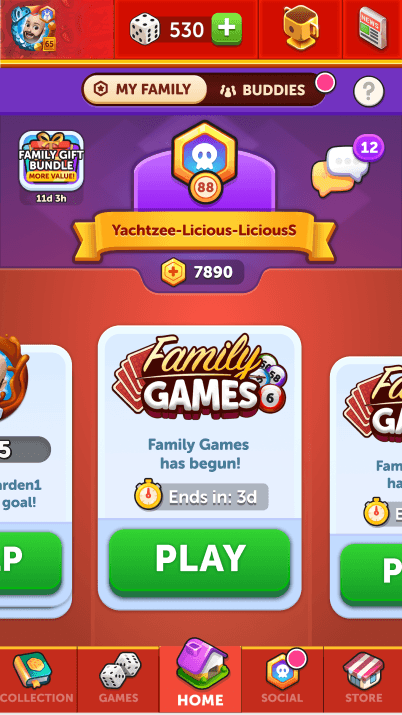
Then leadership changed mid-project and pushed for faster, more measurable wins. The redesign was paused before it shipped. It wasn't wasted though, it built a shared understanding of player behavior and trust in the pod model that carried into everything after.
Phase 2: Low family retention and a "quick win"
Once the lobby redesign got paused, leadership came to us with a different problem: family retention was bad, and they wanted to know why. Our answer was simple, there was no progression mechanic. Everything reset. Points were tied to short matches, teams changed, and there was no long-term goal pulling families back day after day. No progression means no loyalty.
They told us to pivot and solve it. That's where Road Trip came from.
The idea was a shared progression system where families keep playing their favorite games and earning points that build toward something bigger. It's a win-win structure, you get rewards from playing the games themselves, and you get rewards from progressing the family's collective Road Trip. In between game seasons, when there's no fresh content pulling players back, Road Trip is what keeps them motivated to open the app.
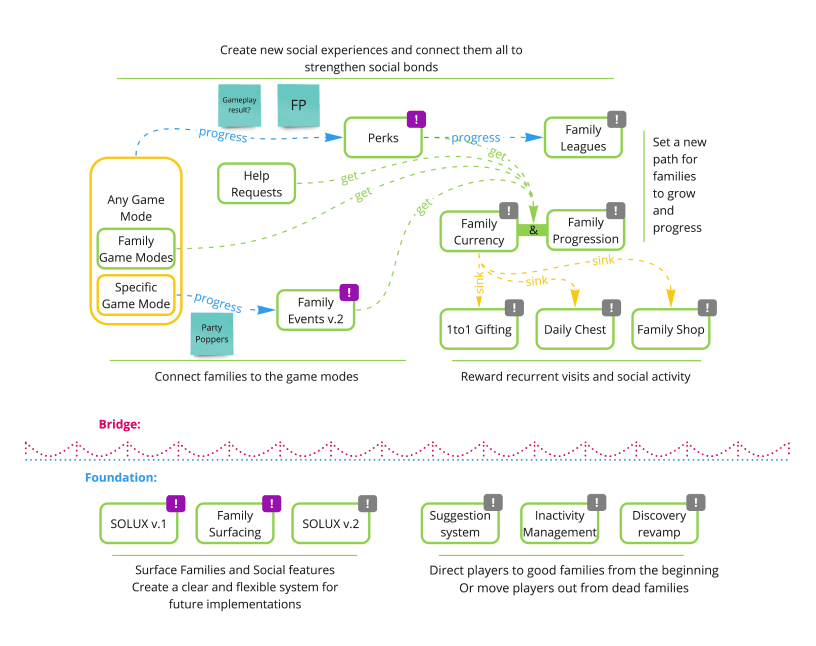
We built the whole thing from scratch, the analogy, the mechanic, the reward structure. We costed it early and broke it into pieces we could test incrementally instead of betting everything on one big launch. We pulled in user feedback at each stage and pushed hard to make the pacing feel earned instead of grindy.
It worked. Road Trip drove real engagement with old family games and retention gains.
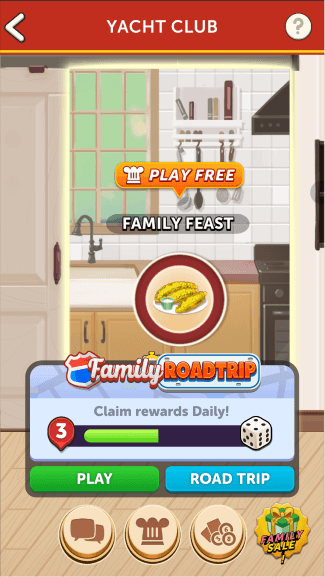
But we shipped with one concession we couldn't avoid, the Road Trip widget got bolted onto the old social lobby we never got to rebuild in Phase 1. Every patch after that made the screen messier. Players couldn't tell what to focus on anymore, chat, games, or Road Trip. Some got frustrated enough that they wanted family features killed off entirely.
That's the mess Phase 3 had to clean up.
Phase 3: Success created a new problem, protecting what players already loved
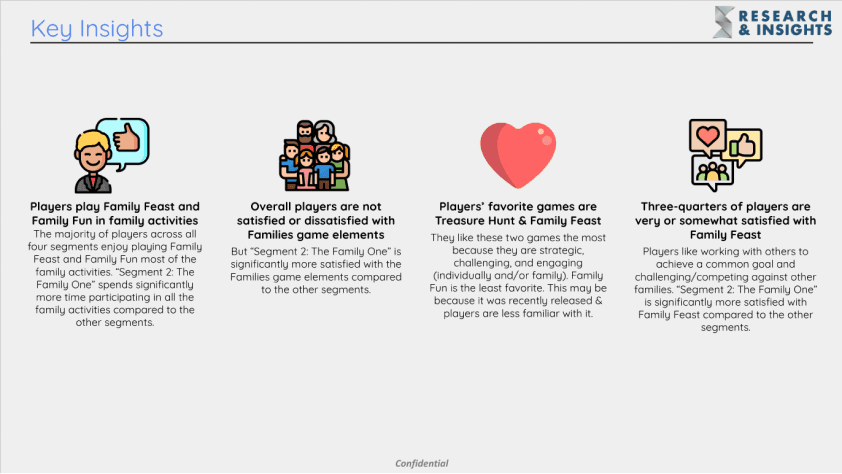
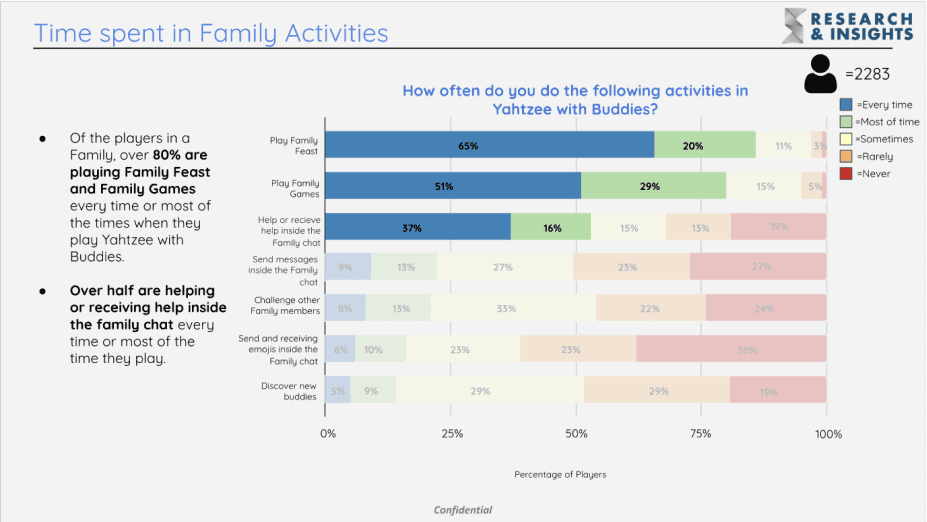
Once Road Trip proved itself, leadership wanted the lobby redesign back, but with scope cut from 7 sprints to 2, and Road Trip mandated as the center of the experience. Research showed players still valued family games and family chat above everything else, and some resisted replacing the familiar layout with a meta system.
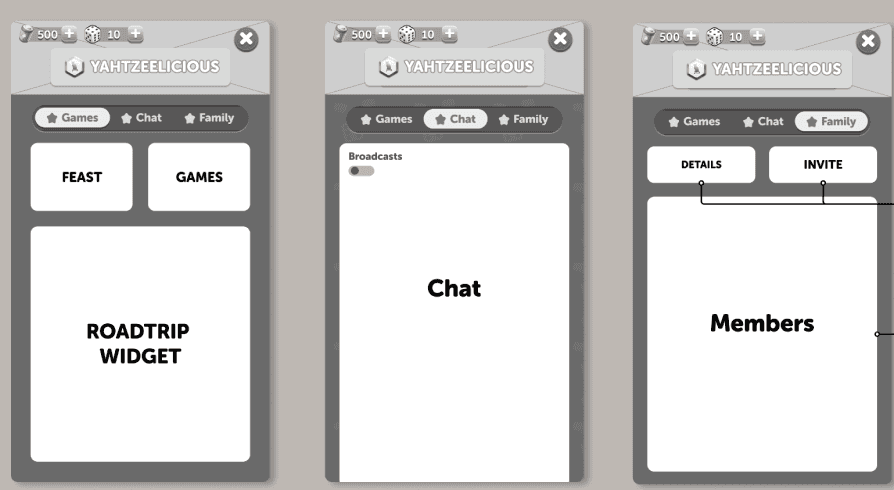
The core question was what motivates players to support family progression without alienating the ones who already found it. I led a fast redesign that made Road Trip the structural anchor while preserving quick access to games and chat, paired with clear in-game messaging to help players adjust.
Once Road Trip was working, the next fight was about what got priority on screen. Leadership pushed to weight the hierarchy toward bundles and monetization, the things with clear ROI. Chat and family help got treated as secondary, easy to deprioritize because they didn't tie to revenue directly.
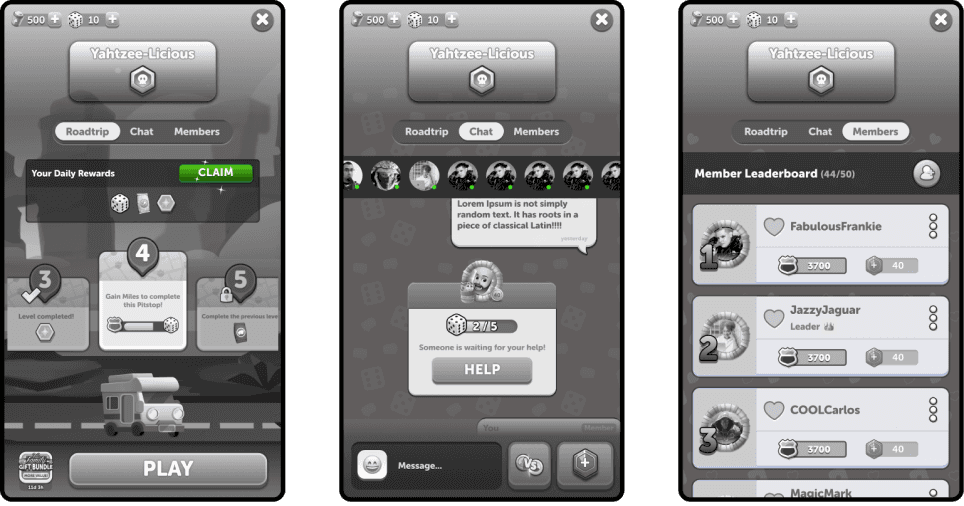
We pushed back. Players were vocal advocates for chat and the help mechanic themselves, it's how families coordinated, encouraged each other, and stayed engaged between sessions. We couldn't win every argument, bundles and Road Trip progress stayed the visual focus, but we kept chat and family help present and functional instead of letting them get buried or cut. It was a compromise, not a win, but it protected the parts of the experience players said mattered most to them.
The final result:

Outcome
Road Trip shipped and drove measurable gains in daily engagement, family participation, and retention. SOLUX Lite shipped despite the compressed timeline, family progression now works across any gameplay, the social area is clearer, and family features stayed intact during a period when they were nearly cut. Some players resisted the change initially, but adoption stabilized. Across three phases and two years, the throughline wasn't one clean win, it was staying player-centered while the business goals, scope, and leadership kept changing around it.